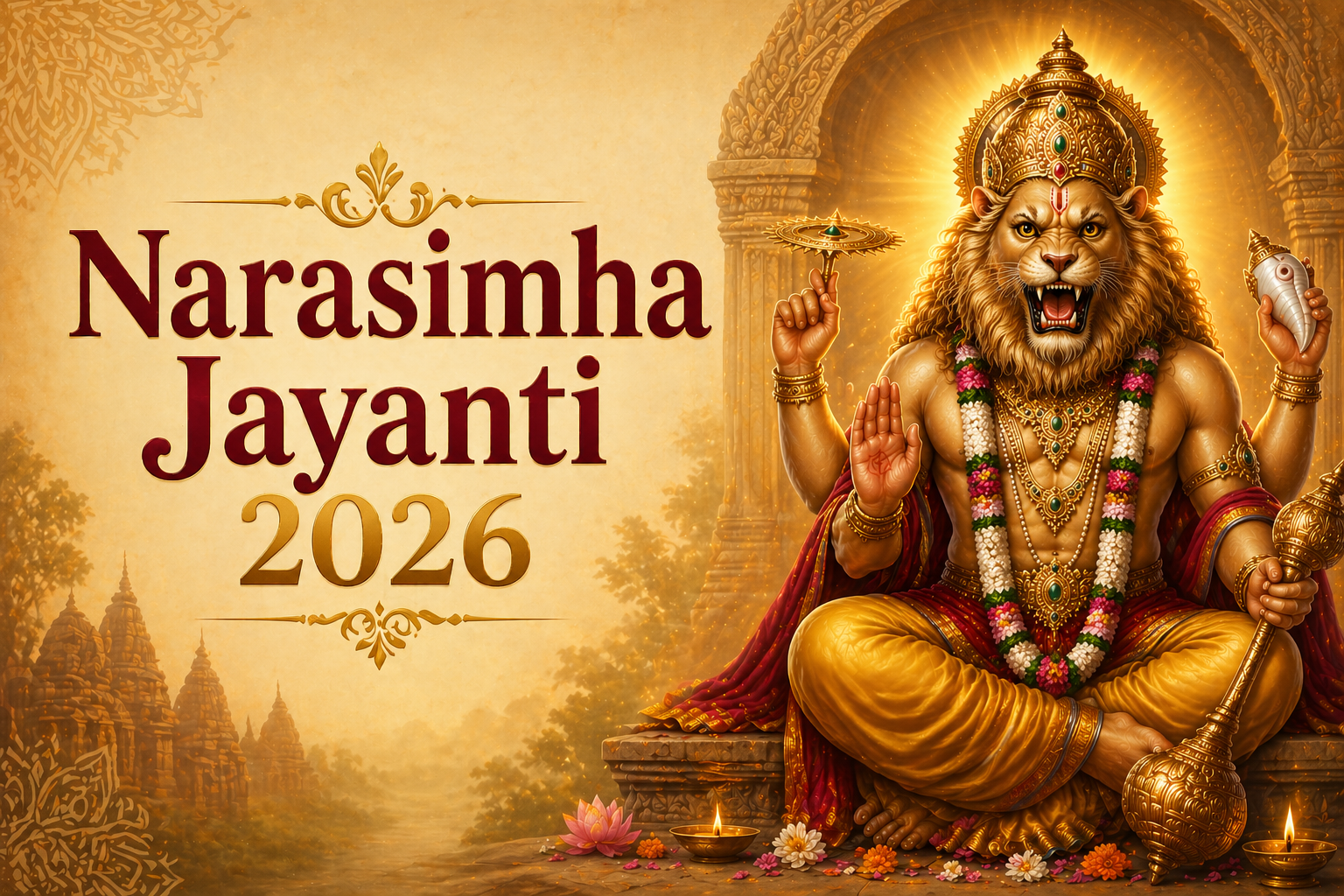
If you are planning to keep the fast and perform Narasimha Jayanti puja this year, timing will make or break your effort. On Thursday, April 30, 2026, Lord Vishnu’s fierce Narasimha avatar is worshipped to remove fear, crush negativity, and grant protection, just as He protected Prahlad. Many devotees do everything with faith, but miss the key windows of time. That’s where most people go wrong. This year, the highest impact worship is during Sunset/Twilight from 04:27 PM to 07:00 PM, with supporting worship in Madhyahna samay (midday window) from 11:19 AM to 01:53 PM. The Chaturdashi tithi (14th lunar day) runs strong until 09:12 PM on April 30, and the fast is broken the next morning after 06:11 AM on May 01, 2026. In this guide, I will give you the exact timings, explain why they matter, and share a clear Puja vidhi you can follow at home—step-by-step, with mantras, offerings like Panchamrita offering, and a simple Chandana Alankara. Keep this open while you prep your altar. Do it right once, and you will feel the shift in your mind and home.
What is the correct time for Narasimha Jayanti puja?
Mark your diary. Narasimha Jayanti 2026 falls on Thursday, April 30. The heart of the day is the Sunset/Twilight window from 04:27 PM to 07:00 PM—this is the peak time to perform arati, stotra recitation, and offer naivedya, because tradition links the appearance of the Narasimha avatar to the transition between day and night. Start your Sankalpa and core worship earlier in the day so you are settled by evening.
Use these precise windows for your schedule: 1) Madhyahna samay (midday auspicious time): 11:19 AM to 01:53 PM. Ideal to take Sankalpa, do abhisheka with Panchamrita offering, apply Chandana Alankara (sandalwood decoration), and begin your mantra-japa. 2) Sunset/Twilight: 04:27 PM to 07:00 PM. Offer final bhoga, perform deepa-arati, chant the Ugram Viram mantra, and read from Vishnu Sahasranama or Narasimha stutis. 3) Chaturdashi tithi support: The tithi begins at 07:51 PM on April 29 and ends at 09:12 PM on April 30. If you are joining temple events later in the evening, you are still within tithi until 09:12 PM.
Fast on Chaturdashi, and perform Parana (fast breaking) the next morning after 06:11 AM on May 01, 2026. If you can only pick one slot for full focus, choose 04:27 PM to 07:00 PM. That alignment is the sweet spot this year. Families with children or elders can complete abhisheka and japa during Madhyahna samay, then light lamps and do arati at sunset together. This staggered approach keeps devotion steady without rush.
Why does puja timing matter?
In Vedic practice, time (Kala) is a living factor. A vrata gains power when it matches the tithi (lunar day) and the natural guna of the hour. Narasimha Jayanti connects to Shukla Chaturdashi of Vaishakha and the evening transition. This is when sattva (purity) and tejas (radiance) peak together to support protection and courage. When you align your Narasimha Jayanti puja with these windows, your mantra-sankhya, offerings, and even simple prayers carry farther—like speaking in a room with perfect acoustics.
Two anchors guide you: 1) Chaturdashi tithi—because the vrata is tithi-bound. Fasting and sankalpa fall within it. 2) The evening phase—because scriptures and parampara emphasize Narasimha’s appearance near dusk. That is why the Sunset/Twilight window, 04:27 PM to 07:00 PM, is your prime slot this year, with Madhyahna samay (11:19 AM to 01:53 PM) a powerful setup time for abhisheka and japa.
A quick example from my consultations: a devotee used to do abhisheka late night after Chaturdashi had ended. He felt dry, as if something was missing. The moment he moved his worship into the evening twilight while the tithi was alive, his mind stilled and his home atmosphere softened. This is not superstition. It is alignment. If you stay within the live tithi and the right phase of the day, your puja feels effortless. You can always check location-specific muhurta and your personalized guidance on 91Astrology.com.
How should you prepare for the puja?
Set up a clean altar with a picture or murti of Sri Lakshmi-Narasimha. Have an Asana (cotton or wool seat) and face east or north. Keep your items ready before Madhyahna samay begins at 11:19 AM. Essentials: ghee lamp, incense, flowers (yellow or white), fruits (banana, mango if available), tulsi leaves, sandalwood paste for Chandana Alankara, camphor, water in a copper lota, a clean cloth, and a plate for offerings.
Panchamrita offering recipe for abhisheka: 5 tbsp cow’s milk, 2 tbsp thick curd, 1 tsp ghee, 1 tsp honey, 1 tsp sugar. Mix clockwise while chanting “Om Namo Bhagavate Narasimhaya.” Keep a separate bowl of clean water for final rinse. Do not mix tulsi directly into Panchamrita; offer tulsi leaves separately on the naivedya or after abhisheka.
Puja vidhi step-by-step (home-friendly): 1) Sankalpa during 11:19 AM–01:53 PM: “Mama upatta samasta durita kshaya dwara Sri Lakshmi-Narasimha prityartham Narasimha Jayanti vrata-puja karishye.” 2) Ganesha invocation: “Om Gam Ganapataye Namah” 11 times. 3) Kalasha puja and achamana (sipping water thrice). 4) Abhisheka with Panchamrita and water. 5) Chandana Alankara on the murti/photo border, with flowers and tulsi leaves. 6) Japa: “Om Namo Bhagavate Narasimhaya” 108 times on a 5-mukhi Rudraksha mala. 7) Stotra: “Ugram Viram Maha-Vishnum Jvalantam Sarvato Mukham, Nrisimham Bhishanam Bhadram Mrityor Mrityum Namamy Aham” 11, 21, or 108 times based on capacity. 8) Evening arati in 04:27 PM–07:00 PM, then naivedya (satvik, no onion/garlic). 9) Prasad distribution.
Optional protective supports: wear a 10-mukhi Rudraksha in a silver pendant (Sunday morning, after purifying in Ganga-jal), and if Jupiter is benefic in your Kundli, a Yellow Sapphire (Pukhraj) 5–7 carats set in gold on the index finger on a Thursday. Not sure about Jupiter? Get your free Kundli on 91Astrology and confirm before wearing a gemstone.
Why is Madhyahna time special?
Many homes struggle to give full attention in the evening because of family routines. That is why Madhyahna samay (11:19 AM to 01:53 PM) is a gift. It is a calm, sattvic window to complete your foundational worship before the high-energy twilight slot. Think of it as laying the foundation: Sankalpa, abhisheka, Chandana Alankara, and the bulk of your mantra-japa fit beautifully here.
A practical schedule I recommend: by 11:15 AM, finish your bath and put on clean, light-colored clothes. From 11:19 AM, sit for Sankalpa and begin japa. Abhisheka with Panchamrita by 12:00–12:30 PM, followed by Chandana Alankara and floral offering. Wrap up by 01:45 PM with a short meditation on the Narasimha avatar—visualize the Lord protecting your home and mind. Rest in the afternoon and prepare your evening bhoga with tulsi garnishing.
Why does this midday window work so well? For Jayanti vratas, many traditions give weight to the deity’s appearance phase and still support a strong midday worship for stability. You collect your mind in the day, and then you offer your devotion at twilight when the protective shakti is most palpable. If you are visiting an ISKCON temple later, doing your home abhisheka and japa in Madhyahna keeps you anchored, and you can join the grand arati and kirtan in the evening with a full heart.
Chaturdashi tithi: significance and its ending time
The Chaturdashi tithi on Narasimha Jayanti signifies the moment divine protection meets righteous anger against adharma. On this lunar day, the fierce compassion of the Narasimha avatar clears fear, curses, and inner enemies like doubt and inertia. Keeping the fast on Chaturdashi tunes your body-mind to receive this protection. Even simple, sincere worship on this day lifts a heavy mental load.
For 2026, the Chaturdashi tithi begins at 07:51 PM on April 29 and ends at 09:12 PM on April 30. That means all your key worship—Sankalpa, abhisheka, japa, arati—should remain within this boundary. The evening highlight window 04:27 PM to 07:00 PM naturally sits before tithi ends, so you are safe. If you are attending a late evening program, plan to complete your core home puja before 07:00 PM and then go to the temple for darshan and kirtan.
Common mistakes to avoid: starting the main Sankalpa before Chaturdashi begins; delaying arati until after 09:12 PM; mixing onion/garlic in naivedya; skipping tulsi; or doing Panchamrita offering without a clean rinse after. Keep tulsi separate from the milk-based mix, and always end abhisheka with a clean water rinse. If you want to time your stotra recitations precisely to your city’s sunset, you can check a personalized muhurta on 91Astrology.com so your schedule stays aligned.
Parana time and method: break the fast correctly
A vrata is complete only when you perform Parana the right way. For Narasimha Jayanti 2026, Parana time 2026 is after 06:11 AM on May 01. Do not break the fast on Chaturdashi night. Wait until the morning, offer naivedya first, then accept prasad. This single step preserves the sankalpa energy you built through the day.
Parana vidhi (simple and authentic): 1) After 06:11 AM, bathe and wear clean clothes. 2) Light a ghee lamp and offer a short arati. 3) Offer a small satvik naivedya—sweet pongal or kheer, bananas, rock sugar, and water with tulsi. 4) Recite “Om Namo Bhagavate Narasimhaya” 21 times and the Ugram Viram verse 11 times. 5) Sip a few drops of charanamrita and water with tulsi, then break your fast with prasad. 6) Dana (charity): offer yellow chana dal, jaggery, or a simple meal to a Brahmin, cow-feeding, or to someone in need. Avoid onion/garlic on Parana day till sunset for a clean close to the vrata.
Health notes I give my clients: if you are elderly, pregnant, or diabetic, keep a phalahar fast (fruits, milk, water) and avoid strain. The Lord values sincerity over show. If fear or anxiety has been heavy for you lately, strengthen the close of the vrata with 108 names of Narasimha or a round of Vishnu Sahasranama in the morning. For ongoing protection, keep a small Narasimha picture near your entrance, and chant “Om Lakshmi Nrisimhaya Namah” 11 times before leaving home. For tailored remedies based on your Dasha and transits, you can check your personalized prediction on 91Astrology.com. Get your free Kundli on 91Astrology to see exactly how this day interacts with your chart and where protection is most needed.